
What to Include in a CNC Machining RFQ
Machining and finished part
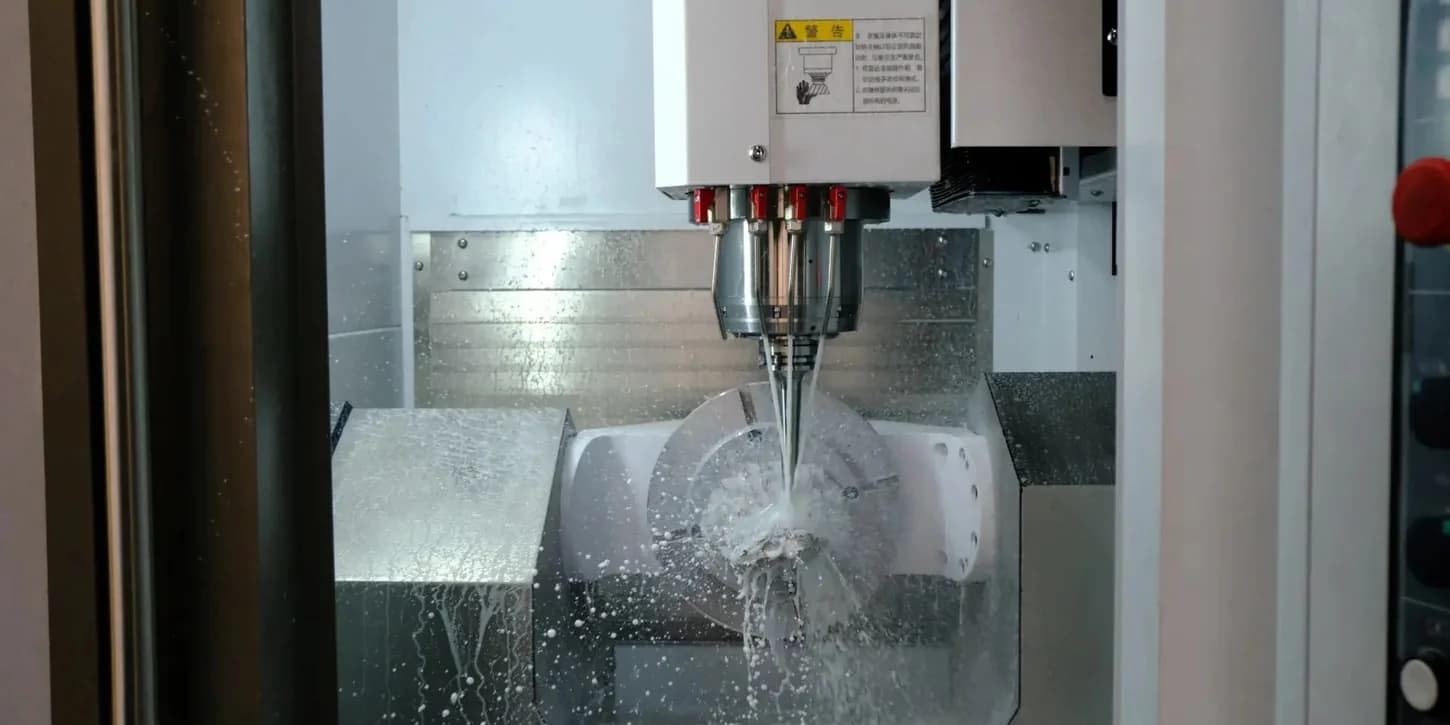

For a CNC machining RFQ, send a revision-matched 3D model and a dimensioned drawing, the exact material and condition, order quantities, required finishes, inspection deliverables and a delivery destination. Identify the dimensions that matter to fit or function. If there is a conflict between files, resolve it in writing before suppliers price the job.
An RFQ is a description of what you intend to buy and how you will accept it. Two shops can price the same shape differently because one included finishing, first-article approval and export packing while the other assumed bare, deburred parts and standard inspection. Ask both shops to confirm the scope in writing. That gives you a comparison you can actually use.
1. Send the right files and one controlled revision
Give the shop both geometry and acceptance requirements
A neutral STEP or IGES model lets a shop review the shape, tool access and potential setups. A dimensioned PDF communicates instructions that may be absent from ordinary solid geometry: tolerance, thread form, datum, material, surface finish and special handling. Send the file formats your supplier accepts and state which document controls each requirement if your company has a model-based definition policy. For a conventional drawing package, explicitly confirm how the shop should handle any disagreement between drawing and model.
Match the filenames, revision and units
Use a part number and revision in both filenames. Open the exact exported files before sending and check the units, orientation and critical features. A common failure mode is a clean-looking model exported before a last-minute drawing change. Look particularly for modified holes, thread starts, seal grooves and chamfers at mating features. A drawing and model with the same revision label can still disagree if the wrong source file was exported.
Send a short transmittal listing each file and revision. If quoting several part numbers, give each its own row with quantity, material, drawing and model. Add any assembly reference separately and identify it as reference only unless it contains controlling requirements. After a revision change, state which old files are superseded and describe the change. Ask for a new quote or written confirmation that the original quote covers the revision.
2. Specify the material the supplier should price
Name the grade, condition and certification
“Aluminum” or “stainless steel” gives the shop too much discretion when the exact material matters. Specify the grade and any required condition, temper or heat treatment. On a housing, the drawing might call for 6061-T6 aluminum, while a mating part has a separate stainless grade. A quotation that lists both as simply “metal” makes it harder to verify pricing and traceability later. If material standards or equivalents apply, state which substitutions you will evaluate and who approves them.
If a certificate is required, specify the document at quote stage. For example, ask whether a mill test report tied to the lot is required and whether heat or batch identifiers must be carried through packing. A supplier statement about the ordered material and a mill certificate linked to the source lot answer different questions. Ask which document will ship and how the report can be connected to the parts.
Describe the service environment when it influences selection
If multiple grades could work, briefly state what matters: outdoor exposure, washdown chemistry, temperature, wear, electrical continuity or reducing weight. Give the actual operating constraints you know and mark unknowns. The shop can raise manufacturability or availability questions. The design owner should approve any material substitution, especially where strength, corrosion resistance, product compliance or mating conditions matter.
3. Define dimensions, finish and inspection together
Mark the features that affect function
Identify the features that control assembly: bearing journals, locating bores, mounting-hole patterns, sealing lands or threaded engagement. Give their actual callouts and a valid datum scheme where needed. A note such as “all dimensions critical” gives the shop little guidance about machining sequence or inspection priorities. If the drawing uses GD&T, state the applicable standard and edition required by your organization. ASME Y14.5 is one established system for communicating geometric requirements.
When possible, explain a feature's job in one line. “This diameter seats in a bearing” or “these two holes locate the bracket” helps the shop understand why material condition, coating or datum selection matters. Avoid rewriting a tolerance in the message unless you also revise the drawing or explicitly issue a controlled clarification. The drawing and acceptance report should refer to the same characteristics and limits.
Indicate when dimensions apply relative to finishing
Name each required finish and applicable surfaces. For anodized housings, identify bores or electrical contact faces that need masking. For a shaft, specify whether a diameter or roughness applies after heat treatment, grinding or any coating. A general cosmetic instruction cannot resolve a functional fit after finishing. For visible cosmetic surfaces, add a sample or agreed appearance criteria if color, texture or handling marks matter. Tell the supplier which areas can carry rack or contact marks where applicable.
Describe secondary work separately when it affects the order. Deburring, cleaning, marking, protective oil and special packaging can all change price or lead time. If you use a note such as “edges broken,” add the controlled limit where the edge engages a seal or installs into a tight bore. If a cleaning test or documented process is required, send the relevant procedure rather than relying on a general “clean” notation.
Ask for the evidence you need to accept the parts
Possible deliverables include a dimensional report, first-article package, thread-gauge results, material certificates and finish documentation. State which you require, which measurements must be actual values, and whether approval is required before production or dispatch. If you want a selected-feature report rather than a full drawing layout, identify those features consistently on the drawing and PO.
Agree on sampling, reporting and escalation with the supplier. “Check all critical features” can mean every feature on sampled parts or every part for selected features. Include your applicable sampling document if your quality team uses one. LatheTime's catalog describes in-process and final checks, gauging for relevant threaded features, and documentation on request. For any given order, confirm the exact scope in the quote and PO.
4. Quote quantities and delivery on comparable terms
Separate prototypes, repeat batches and annual usage
Give the supplier the actual order quantity and ask for specific price breaks you could use. It helps to distinguish an initial engineering lot, a first production batch and the estimated release quantity for repeat orders. Annual demand can inform tooling and material planning, but an estimate is different from a binding commitment. Make clear when a price is based on a single release versus a schedule.
Ask which costs are one-time and which repeat. A quotation may separate setup, programming, special gauges, tooling or a first-article report. An initial price may include fixtures that will be reused. Ask who owns any dedicated tooling, when maintenance is billed and what happens if the part revision changes. Smaller runs can have a higher unit price while keeping engineering exposure low. That trade-off is easier to evaluate when each price covers the same inspection and finish.
Specify destination, dates and the logistics scope
Give the ship-to country and postal code, desired arrival date and any handling constraints. Ask the shop to separate production lead time from transit and clarify what starts the clock: purchase order, drawing clarification, material availability or first-article approval. For time-sensitive orders, agree when the supplier will tell you if the schedule changes. Identify whether a partial shipment is allowed and whether each shipment needs a separate inspection packet.
Ask both suppliers to quote compatible shipping terms. Define who handles freight, duties and taxes for the quoted option instead of comparing numbers with different responsibilities bundled in. If packaging affects acceptance, specify the arrangement: separating polished shafts, protecting threads, using corrosion protection compatible with the part, or placing lot identifiers on individual bags. Confirm that labeling and packing match your receiving process.
5. Use a short RFQ message that your team can reuse
Set up the message so the first screen identifies the part, revision, buyer and due date. Then give the geometry files, material, batch quantities, finish, inspection, destination and open questions. Put conditions affecting acceptance on the controlled drawing or in an explicitly referenced requirement. The email should point the supplier to the source rather than introducing a second version of the same instruction.
Illustrative example: request pricing for a turned stepped shaft, part number SH-014, revision B, with matching PDF and STEP attachments. Ask for a prototype lot and a separate repeat-batch price. Specify the chosen steel grade and condition on the drawing, mark the bearing journal and shoulder, and state whether garden-variety shipping protection or individually separated parts are required. Request a dimensional report on the bearing journal and agreed runout characteristic. These are example procurement details only. Replace every placeholder with approved project values before sending.
A request like this produces useful engineering questions. Can the runout be measured from the intended datum without a custom fixture? Is the specified diameter finished after heat treatment? Does the batch price include individual protection? Ask the supplier to list the quoted assumptions conspicuously. The answers belong in the PO or its attachments if they affect acceptance.
6. Compare responses before placing the purchase order
Check that the quotation names the correct drawing revision, material and quantity. Look for exclusions in finish, inspection, documentation, packing and transport. Ask which operations drive cost and lead time. A quote might suggest inspecting an accessible surface instead of a functional feature. Have engineering review that difference before accepting it.
If you have several suppliers, align each quote in the same comparison sheet. Include material and finish, order quantity and price, lead-time trigger, sample or first-article plan, shipment scope, and unresolved technical questions. Record assumptions from each shop as written and separate them from internal preferences. If a quotation changes, preserve the final approved version and cross-reference it in the PO. Confirm who acknowledges the order and the date the supplier considers the job released.
What an RFQ review looks like on a matching assembly
Link the parts when one fit depends on the other
Imagine a bracket with a replaceable bushing and a locating pin. The bracket needs two accurate bores, the bushing seats in one of them, and the pin needs to slide through the finished bushing. Give each part its own revision, material and quantity. Then supply an assembly view with the intended joints called out. A supplier quoting the three parts can see which dimensions need to work together, which surfaces are finished after machining and whether a documented trial assembly is worth pricing. If you purchase the bushing separately, state who supplies the representative mating part and when it is available.
For a change such as anodizing the bracket after a prototype fit check, ask whether the bores are masked or dimensioned for the finished condition. If the shop requests a change to improve tool access, mark it as a proposal and have the design owner decide whether it affects location, assembly or service. An approved drawing change should be reflected in the quote and inspection plan. Written decisions help when a different buyer orders the next batch.
Agree how to close the open items
Assign each question an owner and a response deadline. Engineering may own the fit and tolerance decision, quality may own acceptance method, and procurement may own timing and release conditions. Use a single clarification list so suppliers see exactly which items they may price as assumptions. If a change affects only one product in a multi-part RFQ, mark the affected part and revision. The remaining parts can retain their prior scope.
Before assigning a purchase order, record the files, answers and documents that form the final agreement. If the initial quote included a drawing review but omitted an actual-value report or protected export packing, attach the supplier's accepted amendment. This handoff gives both the project engineer and receiving inspector a clear record without making them reconstruct old email threads.
Frequently Asked Questions
Is a STEP file enough for a CNC machining quote?
It can support a preliminary estimate if geometry is clear and the supplier knows you are still developing the part. For a production quote, include the dimensioned PDF or approved model-based definition and the material, finish, inspection and quantity requirements. Normal solid geometry alone usually does not communicate all acceptance criteria.
What if I only have a 2D drawing?
Send the drawing and ask whether the supplier can quote it directly. Turned parts with complete dimensions and unambiguous sections are often easier to evaluate from a PDF than complex multi-face parts. If the supplier needs to create geometry for programming, ask whether that work is included and who controls revisions after changes.
Should I specify the machining process myself?
Specify a process when it is a contractual, regulatory or design requirement. If the functional result governs, supply the acceptance criteria and ask the shop to describe its proposed route. On a shaft, for example, the best route may combine turning and grinding. Request written approval for any proposed departure from an existing mandatory process.
How do I request a first article without delaying the order?
Agree when the first article will be produced, which documents are required, who reviews it and how long approval should take. State whether the supplier may buy material or start additional pieces while approval is pending. A defined hold point is useful only if both sides know how it is released.
Can I request a quotation before all specifications are final?
Yes. Mark it as a budgetary request, identify each open decision and ask the supplier to list assumptions. When you finalize the requirements, issue matching, revision-controlled files and ask the supplier to reconfirm price, schedule and scope. Keep the estimate and the order quotation clearly labeled in your purchasing system.
Conclusion
Prepare a CNC machining RFQ around the controlled drawing, material, true order quantity, finish, inspection and destination. Show the shop which features govern assembly and how you will accept them. Ask for assumptions and exclusions in writing, then compare quotations on that shared scope. This approach works for one prototype as well as a repeat production order.
References
Related
- Browse CNC machined products
- Swiss-Type CNC Turning vs. Conventional Turning
- How to Inspect CNC Machined Parts Before Shipment
Request a Machining Quote
Send your matching STEP or IGES file and dimensioned PDF, along with material, quantities and required inspection documents. A LatheTime engineer can review the package and flag questions before quoting.
Send Your Drawing