


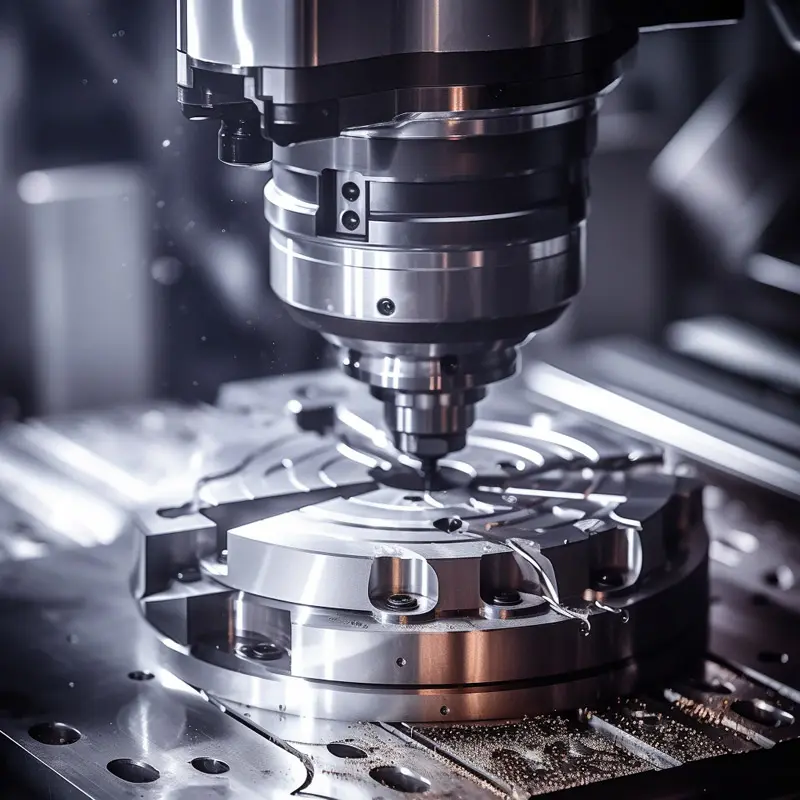
In the world of precision manufacturing, CNC (Computer Numerical Control) machining stands as a cornerstone technology, enabling the creation of complex, high-accuracy parts across industries ranging from aerospace and automotive to medical devices and consumer electronics. At the heart of every successful CNC operation lies the cutting tool—a seemingly small component that directly impacts machining efficiency, part quality, and overall production costs. With a wide array of CNC cutting tools available, each designed for specific materials, operations, and geometries, understanding their unique characteristics and applications is essential for machinists, engineers, and manufacturing professionals alike. In this blog, we’ll dive into the most common types of CNC cutting tools, explore their uses, and share key considerations for selecting the right tool for your project.
1. End Mills: The Versatile Workhorses of CNC Machining
End mills are arguably the most widely used CNC cutting tools, and for good reason—they’re incredibly versatile, capable of performing a range of operations including milling, contouring, slotting, and pocketing. Unlike drills (which only cut axially), end mills can cut both axially and radially, making them ideal for creating complex 2D and 3D features.
### Key Types of End Mills
- Square End Mills: Featuring a flat, square tip, these are the go-to choice for slotting, pocketing, and creating sharp internal corners. They’re available in 2-flute, 4-flute, and multi-flute designs—2-flute end mills are better for chip evacuation in soft materials like aluminum, while 4-flute options offer smoother cuts in harder materials like steel.
- Ball Nose End Mills: With a rounded tip (resembling a ball), these tools are designed for 3D contouring, profiling, and machining curved surfaces. The rounded edge prevents sharp corners, making them perfect for mold and die making, as well as parts with complex geometries (e.g., aerospace components).
- Bull Nose End Mills: A hybrid of square and ball nose end mills, bull nose tools have a rounded corner radius that balances the precision of square end mills with the smooth surface finish of ball nose tools. They’re ideal for machining chamfers, fillets, and surfaces that require both accuracy and a polished finish.
- Roughing End Mills: Also known as “routers” or “hoggers,” these tools are designed for fast material removal (roughing operations). They feature aggressive flute designs (e.g., serrated or chip-breaker flutes) that efficiently break up chips, reducing heat buildup and tool wear. Roughing end mills are often used to quickly shape a workpiece before finishing with a more precise tool.
### Common Applications End mills are used across industries for machining a variety of materials, including aluminum, steel, titanium, plastics, and composites. They’re essential for creating parts like engine components, electronic enclosures, and medical implants.
2. Drills: Precision Hole-Making Tools
While end mills can create holes, drills are specifically designed for hole-making operations, offering higher efficiency and accuracy for this task. CNC drills cut axially (along the tool’s centerline) and are available in several types to accommodate different hole sizes, depths, and material requirements.
### Key Types of CNC Drills
- Twist Drills: The most common type of drill, twist drills feature spiral flutes that evacuate chips and guide the tool into the workpiece. They’re used for creating through-holes and blind holes in a wide range of materials. CNC twist drills are often coated (e.g., TiN, TiAlN) to improve wear resistance and reduce friction.
- Spot Drills: These short, rigid drills are used to create a small indentation (spot) on the workpiece before drilling. This spot helps center the twist drill, preventing it from wandering and ensuring the hole is drilled at the correct location. Spot drills are essential for precision hole-making.
- Deep Hole Drills: Designed for drilling holes with a depth-to-diameter ratio greater than 5:1, deep hole drills feature specialized flute designs and coolant channels to remove chips and cool the cutting edge. Examples include gun drills (for very deep holes) and BTA drills (for high-precision deep holes in large workpieces).
- Countersinks and Counterbores: These tools are used to modify existing holes. Countersinks create a conical recess to accommodate flat-head screws, while counterbores create a cylindrical recess for socket-head screws. Both ensure the fastener sits flush with the workpiece surface.
### Common Applications Drills are used in almost every manufacturing industry for creating holes in parts like automotive engine blocks, aerospace fasteners, medical instruments, and electronic circuit boards.
3. Turning Tools: For Lathe Machining Operations
CNC turning tools are used in lathe machines, where the workpiece rotates while the tool remains stationary (or moves linearly) to remove material. These tools are designed to machine cylindrical, conical, or spherical surfaces, as well as perform operations like facing, threading, and grooving.
### Key Types of Turning Tools
- External Turning Tools: Used to machine the outer surface of a rotating workpiece (e.g., creating a cylindrical shape or tapering a part). They’re available in different insert geometries to accommodate different materials and cutting angles.
- Internal Turning Tools: Also known as boring bars, these tools are used to machine the inner surface of a hole (e.g., enlarging a hole or creating a precision bore). Boring bars must be rigid to prevent vibration, which can affect the accuracy of the bore.
- Facing Tools: Designed to machine the end face of a workpiece, facing tools create a flat, smooth surface perpendicular to the workpiece’s axis. They’re often used at the start of a turning operation to ensure the workpiece is properly aligned.
- Threading Tools: Used to create internal or external threads on a workpiece. CNC threading tools can produce a variety of thread types, including metric, imperial, and ACME threads, with high precision.
- Grooving and Parting Tools: Grooving tools create narrow channels (grooves) on the workpiece, while parting tools (also called cutoff tools) are used to separate a finished part from the raw material. Both tools require sharp cutting edges and good chip evacuation to prevent tool breakage.
### Common Applications Turning tools are essential for manufacturing cylindrical parts like shafts, bolts, nuts, and bushings. They’re widely used in the automotive, aerospace, and industrial equipment industries.
4. Milling Cutters: Beyond End Mills
While end mills are a type of milling cutter, there are several other specialized milling cutters designed for specific operations. These tools are used in CNC milling machines, where the tool rotates while the workpiece moves (or vice versa) to remove material.
### Key Types of Specialized Milling Cutters
- Face Mills: Used for machining large, flat surfaces (face milling). Face mills have multiple cutting inserts arranged on a rotating disk, allowing for fast material removal and a smooth surface finish. They’re often used to machine the top or bottom face of a workpiece.
- Side Mills: Designed to machine the side of a workpiece (perpendicular to the tool’s axis). They feature cutting edges on the side of the tool and are used for slotting, grooving, and machining vertical surfaces.
- Shell Mills: Similar to face mills but with a hollow center, shell mills are mounted on an arbor and used for face milling and slotting. They’re available in large diameters, making them ideal for machining large workpieces.
- Slab Mills: Used for slab milling (machining a flat surface parallel to the tool’s axis). Slab mills have a long, cylindrical shape with cutting edges on the circumference, and they’re used to remove large amounts of material quickly.
### Common Applications Specialized milling cutters are used in industries like aerospace (for machining large structural components), automotive (for engine blocks and transmission parts), and模具制造 (for mold cavities and cores).
5. Key Considerations for Selecting CNC Cutting Tools
Choosing the right CNC cutting tool is critical for achieving optimal performance and quality. Here are some key factors to consider:
- Workpiece Material: Different materials require different tool materials and coatings. For example, high-speed steel (HSS) tools are suitable for soft materials like aluminum and plastic, while carbide tools are better for hard materials like steel and titanium. Coatings like TiN (titanium nitride) and TiAlN (titanium aluminum nitride) improve wear resistance and reduce friction.
- Machining Operation: Select a tool designed for the specific operation (e.g., end mills for contouring, drills for hole-making, turning tools for lathe operations).
- Tool Material: Common tool materials include HSS, carbide, ceramic, and diamond. Carbide is the most popular choice for CNC machining due to its high hardness and wear resistance.
- Flute Count and Design: The number of flutes affects chip evacuation and cutting speed. More flutes (e.g., 4-6 flutes) provide a smoother finish but may struggle with chip evacuation in soft materials. Fewer flutes (e.g., 2 flutes) are better for chip evacuation but may produce a rougher finish.
- Coolant Requirements: Some tools require coolant to reduce heat buildup and extend tool life. Consider whether the tool is compatible with the coolant system of your CNC machine.
- Tool Life and Cost: While high-quality tools may have a higher upfront cost, they often offer longer tool life and better performance, reducing overall production costs in the long run.
Conclusion
CNC cutting tools are the unsung heroes of precision manufacturing, enabling the creation of the complex, high-quality parts that power our modern world. From versatile end mills and precision drills to specialized turning and milling cutters, each tool has a unique role to play in the machining process. By understanding the different types of CNC cutting tools, their applications, and the key factors to consider when selecting them, you can optimize your machining operations, improve part quality, and reduce production costs. Whether you’re a seasoned machinist or just starting in the industry, investing time in learning about CNC cutting tools is a worthwhile endeavor that will pay dividends in your work.
What’s your go-to CNC cutting tool for specific applications? Share your experiences and tips in the comments below!